

How to Build a Powerful Brand on Amazon: Pro Seller Guide
Amazon has transformed from a simple online marketplace to a sophisticated ecosystem where brand building isn’t just possible—it’s essential for seller success. Today’s competitive Amazon landscape rewards businesses that create distinctive brand identities, foster customer loyalty, and protect their intellectual property.
Brand building on Amazon involves strategically developing a recognizable identity that resonates with customers, establishing trust, and creating a cohesive presence across all touchpoints. Strong brands command higher prices, enjoy greater customer loyalty, and maintain defensibility against competitors.
Recent industry data reveals that branded products typically achieve conversion rates 3-5 times higher than generic alternatives, while also commanding premium pricing. As Amazon’s marketplace grows increasingly competitive, with over 2 million active sellers worldwide, building a powerful brand has become the critical differentiator between thriving businesses and those struggling to survive.
In this comprehensive guide, you’ll learn the essential strategies for building, growing, and protecting a powerful Amazon brand—from foundational identity development to advanced optimization techniques that drive customer loyalty and sustainable growth.
Why brand building matters on Amazon
Building a brand on Amazon transcends mere product selling—it creates lasting business value through customer perception, loyalty, and trust. While unbranded products compete primarily on price, branded offerings command premium pricing, enjoy higher perceived quality, and build invaluable customer relationships.
Amazon functions as a product discovery hub where approximately 63% of consumers begin their product searches. This consumer behavior makes the platform an essential battleground for establishing brand recognition. When shoppers encounter your products through search results, sponsored placements, or recommendations, a strong brand identity significantly impacts their purchasing decisions.
Consider how shoppers interact with Amazon: they typically scan listings quickly, making split-second judgments about product quality and reliability. Recognizable brands immediately communicate trust, quality standards, and consistency—crucial factors that significantly influence buying decisions.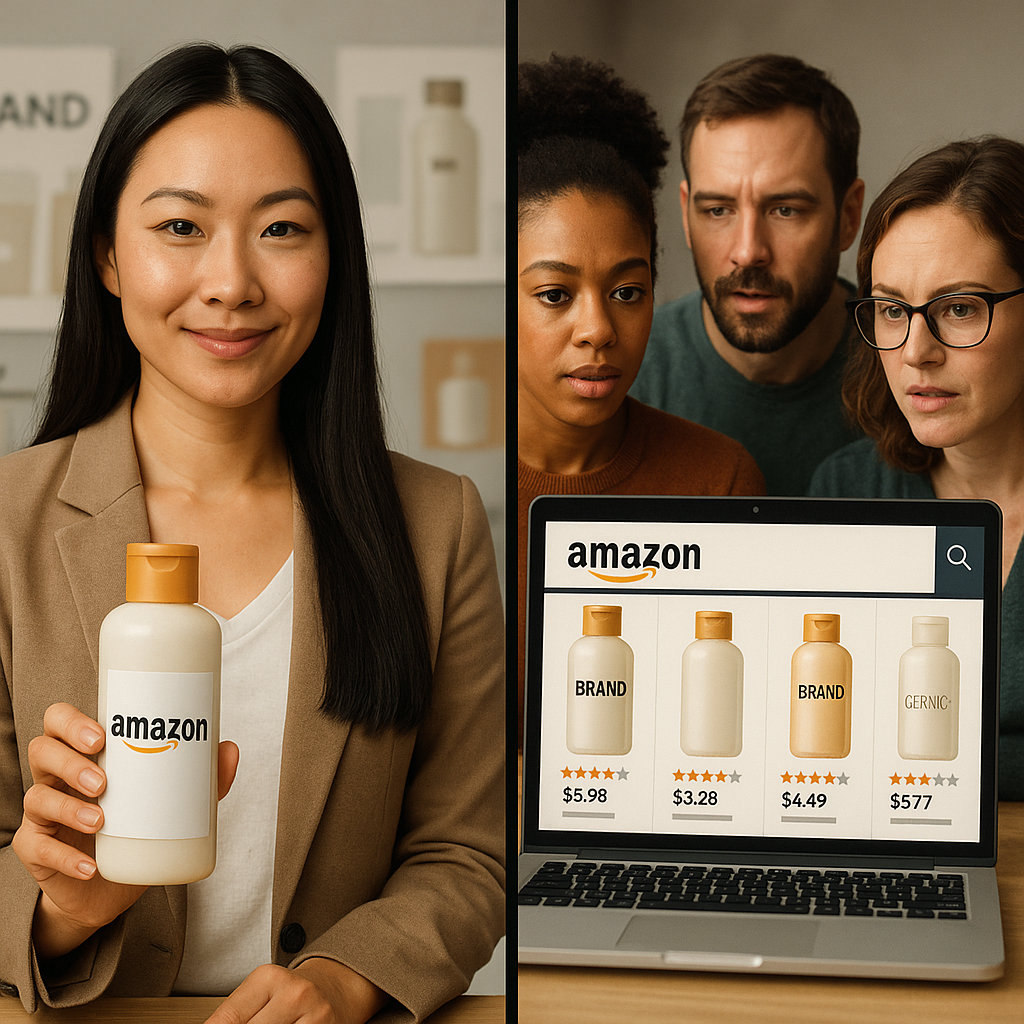
By developing a distinctive Amazon presence, you create mental shortcuts that help customers choose your products over competitors.
Brand as competitive differentiator
A recognizable brand provides a significant competitive edge in Amazon’s complex marketplace. Strong brands consistently win the Buy Box more frequently, as Amazon’s algorithm favors sellers with higher customer satisfaction metrics—a direct benefit of consistent brand experience.
Branded products typically generate more reviews (and higher ratings) than generic alternatives because customers form expectations before purchase. When those expectations align with their experience, satisfaction increases. Additionally, branded products enjoy substantially higher repeat purchase rates, with loyal customers returning for additional purchases rather than searching for alternatives each time.
This ongoing relationship creates a compound effect: as your brand recognition grows, your marketing efficiency improves, allowing you to reinvest in product development, enhanced content, and advertising—further strengthening your competitive position.
Laying the foundation — crafting your brand identity for Amazon
Establishing a compelling brand identity tailored for the Amazon ecosystem requires methodical planning and execution across multiple dimensions.
Start with your brand name—a critical asset that should be memorable, search-friendly, and trademark-eligible. Conduct thorough research using the USPTO database and Amazon’s existing catalog to ensure uniqueness. Effective brand names typically evoke key product benefits, are easy to spell and remember, and avoid restrictions in potential future categories.
Your visual identity begins with a professional logo that works effectively across various sizes—from the small thumbnail in search results to larger placements on your storefront. Invest in professional design that captures your brand essence while remaining legible at all scales. Complementary visual elements including color schemes, typography, and image styles should remain consistent across all touchpoints.
Develop a compelling brand story that communicates your purpose, values, and unique market position. Effective brand stories typically address:
- the founding inspiration or problem your products solve
- your unique approach or methodology
- core values that guide product development
- relevant founder expertise or experience
- authentic connections to customer needs
Consistency across all elements creates a cohesive customer experience—from product listings to packaging, A+ Content to customer service communications.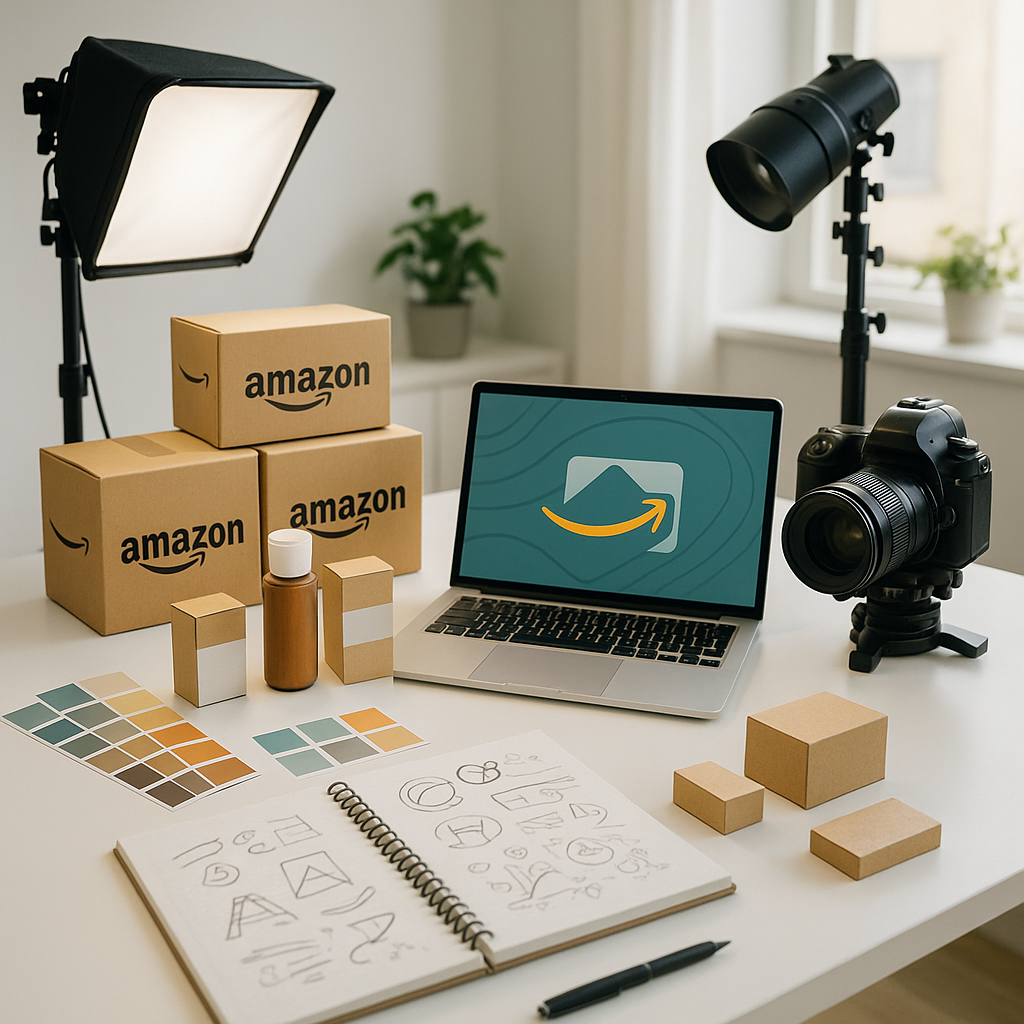
This consistency builds recognition and reinforces your brand promises throughout the customer journey.
Audience and market research for positioning
Effective brand positioning requires deep understanding of both your target audience and competitive landscape. Begin by analyzing Amazon’s Best Seller Rankings within your category to identify successful competitors and market gaps.
Examine competitor listings, paying particular attention to their:
- visual presentation styles
- messaging themes and value propositions
- price positioning and product feature emphasis
- customer review themes (both positive and negative)
Develop detailed customer personas by analyzing review content for psychographic insights—what emotional needs drive purchases in your category? What language do customers use to describe problems and desired outcomes? This intelligence helps craft positioning that resonates authentically.
Consider leveraging Amazon’s IP Accelerator program for professional guidance on trademark registration while simultaneously accelerating your access to Brand Registry benefits. This investment streamlines the path to brand protection while unlocking the full suite of Amazon brand-building tools.
Registration, protection, and Amazon Brand Registry
Legal protection forms the foundation of sustainable brand development on the marketplace.
Without formal registration and enrollment in Amazon’s Brand Registry program, sellers remain vulnerable to counterfeiters, listing hijackers, and unauthorized resellers that can quickly erode brand equity and customer trust.
The first essential step involves securing a registered trademark through the USPTO or equivalent international authority. While the standard trademark process typically takes 9-12 months, Amazon recognizes pending applications through their IP Accelerator program—providing early access to brand protection tools.
Amazon Brand Registry enrollment requires:
- an active registered trademark or pending application through IP Accelerator
- verification that you’re the rights owner or authorized agent
- images of your product and packaging showing the trademark
- product categories where you’ll sell
Once enrolled, Brand Registry unlocks essential protection capabilities including:
- proactive brand monitoring that automatically identifies potentially infringing listings
- simplified violation reporting with expedited review
- global search capabilities to identify potential infringers using text and image matching
- greater control over product detail pages and content accuracy
For enhanced protection, consider Amazon’s Transparency program, which provides item-level authentication through unique codes that customers can verify. This system effectively blocks counterfeits from reaching customers, as Amazon’s fulfillment centers validate each code before shipping products.
Project Zero represents Amazon’s most advanced brand protection offering, combining automated protections with self-service counterfeit removal tools. While requiring additional approval beyond standard Brand Registry enrollment, this program provides the most comprehensive defense against intellectual property violations.
Elevating your presence — building and optimizing product listings
Transforming basic product listings into powerful brand assets requires strategic optimization across multiple content elements.
Product titles represent your first impression opportunity and should follow a consistent format that emphasizes both searchability and brand recognition. Rather than keyword-stuffed titles, develop a consistent structure that leads with your brand name, followed by key product identifiers, primary benefits, and essential specifications. This approach builds brand recognition while maintaining search visibility.
Bullet points provide your opportunity to communicate unique value propositions through consistent brand voice. Develop a standardized approach where each bullet addresses a specific customer concern or benefit category. Strong branded bullets often follow patterns like:
- Bullet 1: Primary product benefit with brand-specific technology or approach
- Bullet 2: Secondary functional benefits with supporting details
- Bullet 3: Quality indicators, materials, or construction methods
- Bullet 4: Usage scenarios or compatibility information
- Bullet 5: Guarantee or risk-reversal statement
Product imagery requires particular attention for brand building. Develop a consistent visual language including standardized backgrounds, perspective angles, lighting approaches, and supplementary graphics. Professional photography with consistent styling creates immediate visual recognition while communicating quality standards.
A+ Content represents one of the most powerful brand-building opportunities within Amazon’s ecosystem. Effective A+ modules typically include:
- brand story elements that communicate heritage and values
- comparison charts highlighting your product range
- lifestyle imagery showing products in authentic use contexts
- technical diagrams explaining proprietary features
- cross-selling modules introducing complementary products
Create a unified visual identity throughout your A+ Content using consistent typography, color schemes, and graphic elements that reinforce brand recognition.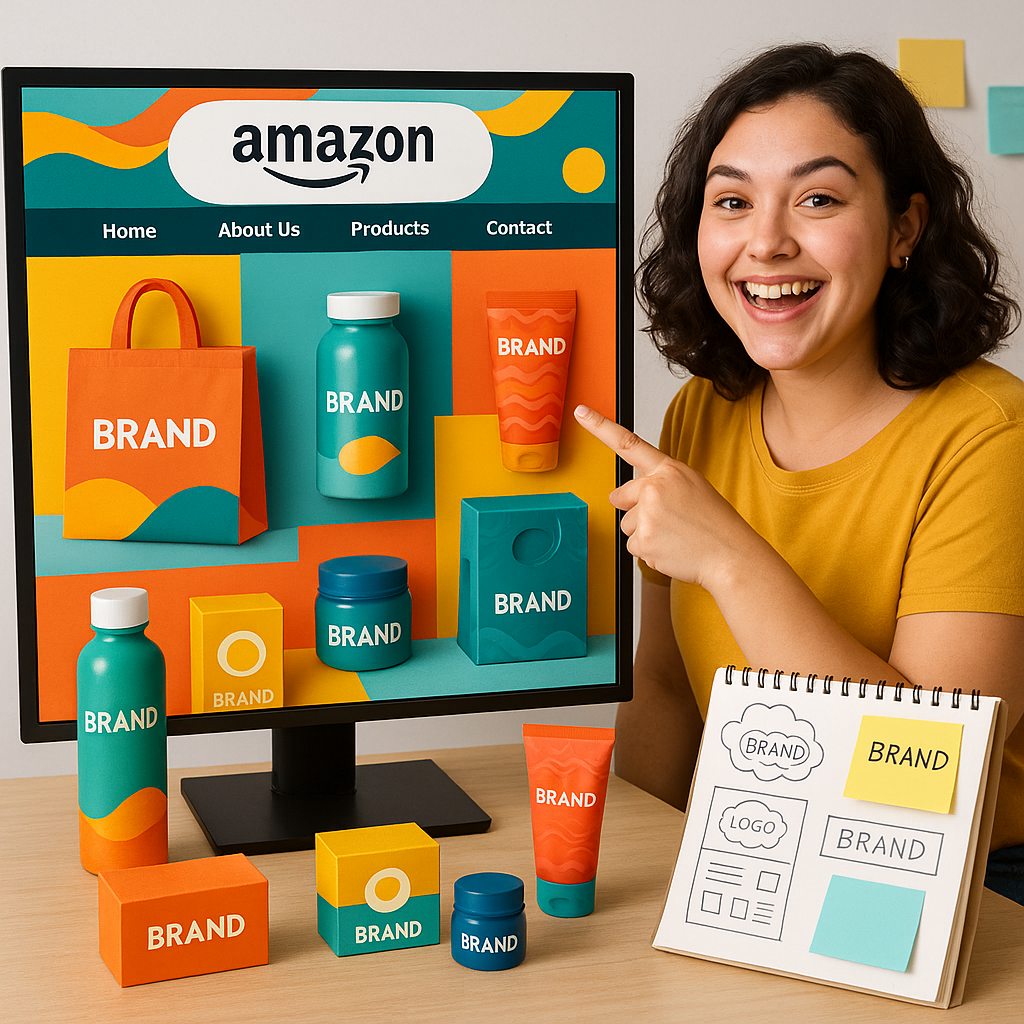
This enhanced content not only improves conversion rates but significantly strengthens brand perception and customer understanding of your unique value proposition.
Promoting and scaling your brand on Amazon
With your brand foundation established, strategic promotion becomes essential for building awareness and driving customer acquisition.
Sponsored Brands campaigns represent your most powerful brand awareness tool within Amazon’s advertising ecosystem. These prominent placements feature your logo, custom headline, and multiple products at the top of search results. Design these advertisements to communicate core brand positioning rather than just product features—focus on the overarching customer benefit that unifies your product line.
Complement these awareness campaigns with targeted Sponsored Products advertisements that capture high-intent traffic for specific product searches. Develop a systematic approach where awareness campaigns introduce your brand to new customers, while product-specific advertisements convert those already searching for solutions.
Amazon Stores provide immersive, conversion-focused destinations that showcase your complete brand experience. Effective store designs typically include:
- compelling above-the-fold imagery communicating brand positioning
- clear navigation pathways based on customer shopping patterns
- curated collections addressing specific needs or use cases
- embedded video content demonstrating products and telling brand stories
- lifestyle imagery showing products in authentic contexts
Drive traffic to your store through Sponsored Brands advertisements, product inserts, and off-platform marketing efforts. Amazon provides store analytics showing traffic sources, page views, and sales—invaluable data for optimizing the customer journey.
Strategic promotions build brand awareness while incentivizing trial. Coordinate Lightning Deals, coupons, and promotional codes to align with your external marketing calendar. These promotional tools are particularly effective when launching new products or expanding into adjacent categories where your brand awareness may be lower.
Brand Analytics provides crucial competitive intelligence including search term data revealing customer discovery patterns, market basket analysis showing complementary purchase behaviors, and demographic insights that refine your targeting. Use these insights to evolve your brand positioning, identify expansion opportunities, and refine marketing messages for maximum resonance.
Leveraging customer reviews & feedback loops
Customer reviews function as powerful social proof while providing invaluable product development feedback. Implement systematic review generation through post-purchase email sequences, package inserts, and Amazon’s “Request a Review” feature. Focus on velocity (consistent new reviews) rather than just volume, as recent reviews significantly impact purchase decisions.
Develop a consistent approach to review management including:
- monitoring new reviews daily across all products
- responding professionally to negative feedback
- identifying recurring themes that inform product improvements
- highlighting top reviews that effectively communicate your value proposition
The Voice of the Customer dashboard provides aggregated feedback highlighting potential listing improvements and product issues before they impact your seller metrics. This proactive approach to feedback management maintains positive brand perception while continuously improving your product experience.
Brand protection and long-term success strategies
Protecting your established brand requires vigilant monitoring and proactive enforcement across multiple dimensions.
Leverage Brand Registry’s automated protections by ensuring all intellectual property is properly registered and documented within the system. Regularly review suspected infringement reports and take swift action on legitimate violations. Brand Registry provides accelerated resolution processes for registered brand owners, significantly reducing the time required to remove counterfeit or infringing listings.
Implement systematic monitoring practices including:
- weekly searches for your brand terms and product names
- regular review of the “Buy Box” across your catalog
- mystery shopping of your products from third-party sellers
- monitoring price points across all distribution channels
Develop clear distribution agreements with authorized wholesalers and distributors, including specific language about authorized sales channels and minimum advertised pricing policies. These agreements create legal foundation for removing unauthorized sellers who may damage your brand reputation through poor service or counterfeit products.
Consider implementing Amazon’s Transparency program for high-margin or frequently counterfeited products. This item-level authentication system requires minimal per-unit investment while providing substantial protection against counterfeits reaching customers.
Regular competitive analysis remains essential for long-term brand health. Quarterly reviews of competitor messaging, pricing strategies, and feature development help identify potential threats and opportunities before they significantly impact your market position. Use Brand Analytics data to track share of search and category performance, identifying early warning signs of emerging competitors.
Document all brand protection activities and outcomes, creating an evidence trail that strengthens future enforcement actions. This systematic approach demonstrates your active brand protection efforts—a factor Amazon considers when evaluating seller account health and future infringement claims.
Conclusion
Building a powerful brand on Amazon requires systematic effort across multiple dimensions—from foundational identity development through optimization, promotion, and ongoing protection. The platform has evolved from a simple sales channel to a sophisticated brand-building ecosystem providing the tools needed for creating distinctive, defensible market positions.
The most successful Amazon brands recognize that strong branding delivers compound benefits: higher conversion rates, premium pricing opportunities, improved customer loyalty, and defensibility against competitors. By implementing the strategies outlined in this guide, sellers can transform commoditized products into recognized brands that command customer attention and loyalty.
Begin your brand-building journey with concrete next steps: enroll in Brand Registry to unlock essential tools, audit existing listings for consistency and optimization opportunities, and develop your Amazon Storefront as the central hub of your brand experience. Remember that brand building is an ongoing process requiring continuous refinement based on customer feedback and market evolution.
The sellers who approach Amazon with a brand-first mindset—rather than a product-first or sales-first approach—create sustainable business assets that deliver value far beyond individual transactions. By investing in your brand foundation today, you build the framework for lasting marketplace success.
FAQs
What is Amazon Brand Registry, and how does it help protect my brand?
Amazon Brand Registry verifies your trademark and grants access to advanced tools for managing and protecting your brand, such as removing counterfeits and controlling product content.
How do I create consistent branding across all Amazon product listings?
Use a style guide covering visual assets, tone of voice, and standard content elements, and leverage A+ Content and Amazon Stores to unify shopper experience.
Is it necessary to trademark my brand before selling on Amazon?
While not mandatory to list products, a registered (or at least pending) trademark is required for Brand Registry and its full suite of brand-building tools.
How can I increase brand visibility on Amazon?
Leverage Sponsored Brands ads, optimize your storefront, utilize A+ Content, and encourage reviews while leveraging in-depth analytics to refine your approach.
What are the best ways to get customer feedback and respond on Amazon?
Regularly monitor reviews, use Amazon’s Customer Reviews management tool, and respond promptly to feedback for trust-building and product improvement.