
Amazon Brand Story: Real-World Examples to Inspire You
In the competitive landscape of Amazon, standing out is more than just about having great products—it’s about creating meaningful connections with customers. That’s where Amazon Brand Story comes in. This powerful feature, available through Amazon’s A+ Content, gives brand owners a dedicated space to share their origin, values, and unique selling propositions directly with shoppers.
Located prominently in the “From the brand” section above traditional A+ Content, Brand Story offers a valuable opportunity to build trust and emotional connection before customers even scroll to product details.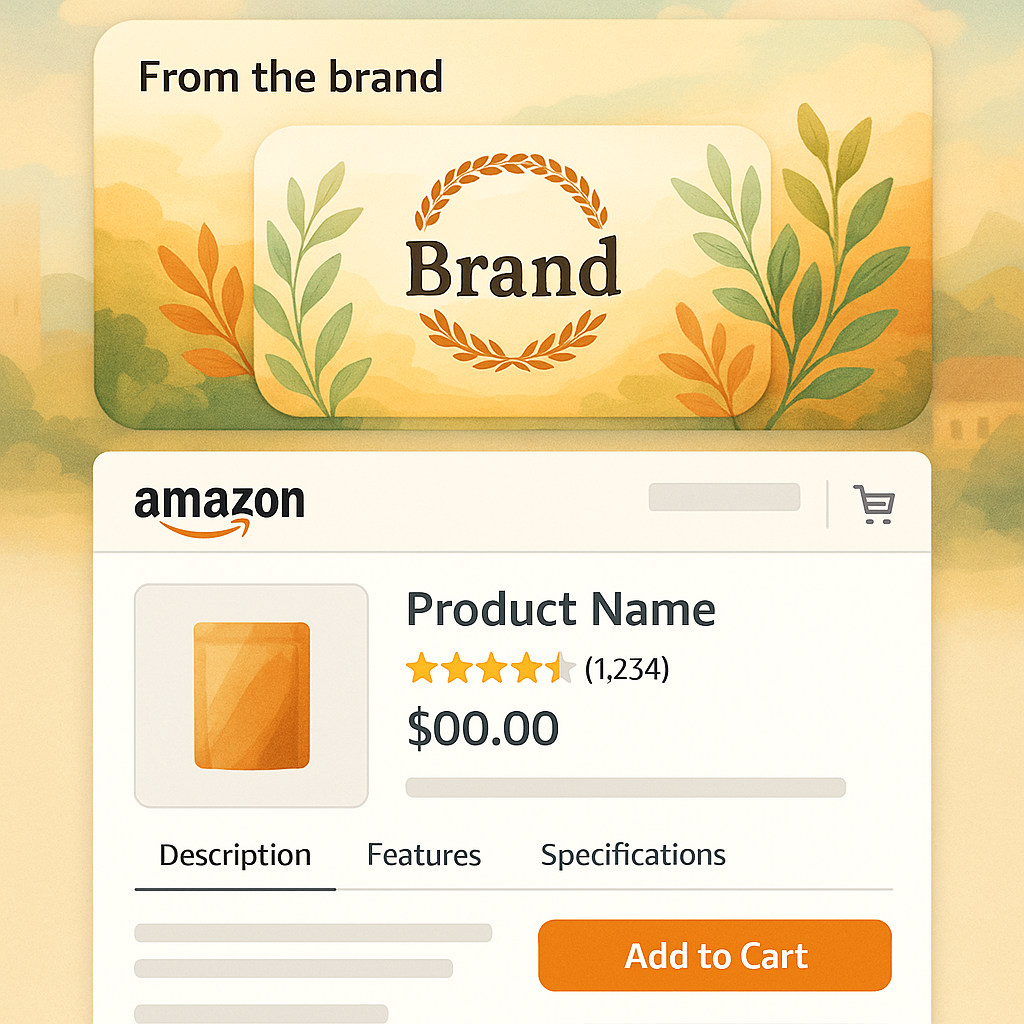
As Amazon continues to evolve its platform for brand-registered sellers, this feature has become an essential tool for communicating brand identity and differentiating from competitors.
In this comprehensive guide, you’ll discover how leading brands leverage Amazon Brand Story to increase conversions, build customer loyalty, and create memorable shopping experiences. We’ll explore real-world examples that demonstrate best practices, provide step-by-step guidance on creating your own compelling brand narrative, and reveal common pitfalls to avoid.
Understanding the Amazon Brand Story module
The Brand Story feature is a powerful yet often underutilized component of Amazon’s A+ Content ecosystem. Positioned prominently at the top of product detail pages in the “From the brand” section, it creates an immediate opportunity to connect with potential customers before they dive into specific product details.
Only sellers and vendors enrolled in Amazon Brand Registry can access this premium content feature through the A+ Content Manager in Seller Central. This exclusivity ensures that only legitimate brand owners can craft their narrative, maintaining the integrity of the shopping experience.
The Brand Story module consists of several customizable components:
- Brand Carousel Background: The banner-like header image that sets the visual tone for your story
- Brand ASIN & Store Showcase: A section allowing you to highlight up to four related products and link to your Brand Store
- Brand Focus Image: A prominent image space to showcase your values, manufacturing process, or product benefits
- Brand Logo & Description: Where your logo appears alongside your core brand message
- Brand Q&A: An interactive element addressing common customer questions about your company
According to Amazon Seller Central documentation, “Brand Story helps customers learn more about your brand’s history, mission, and products.” This placement is strategic—appearing before customers engage with detailed product information helps shape their perception and build trust at a crucial decision-making moment.
Unlike standard A+ Content that appears further down the page, Brand Story offers a dedicated space to communicate who you are as a company, not just what you sell. This distinction is important for brands seeking to create emotional connections beyond product features and benefits.
What makes a Brand Story different from A+ Content?
While both Brand Story and A+ Content fall under Amazon’s enhanced content offerings, they serve different purposes in the customer journey. A+ Content primarily focuses on showcasing product features, specifications, and use cases through comparison charts, enhanced images, and detailed descriptions.
Brand Story, however, elevates the conversation to focus on your company’s identity—sharing your mission, values, origin story, and the people behind the products. It’s about humanizing your brand in the digital marketplace and creating an emotional bridge to customers who increasingly care about who they buy from, not just what they’re buying.
How to craft an effective Amazon Brand Story
Creating a compelling Brand Story requires thoughtful planning and strategic execution. The process begins well before you access the A+ Content Manager in Seller Central. Here’s how to approach it systematically:
Step 1: Define your narrative framework
Start by identifying the core elements that make your brand unique. Consider these guiding questions:
- What problem or need inspired the creation of your brand?
- What values drive your company decisions?
- What makes your manufacturing process, materials, or approach special?
- How do customers’ lives improve through your products?
Document these answers in a concise, authentic way that reflects your brand voice. Avoid generic claims that could apply to any company—specificity builds credibility.
Step 2: Design with intention
Visual elements are crucial for brand storytelling on Amazon. When planning your imagery:
- Use consistent color schemes that match your brand identity
- Select high-resolution images (minimum 1500 x 300 pixels for carousel backgrounds)
- Include lifestyle photography showing products in use
- Consider including founder photos or behind-the-scenes imagery
- Ensure all visual elements maintain professional quality
Brand consistency across all touchpoints enhances recognition and trust.
Your Amazon Brand Story should visually align with your website, packaging, and other marketing materials.
Step 3: Implement through A+ Content Manager
Once your strategy and assets are ready:
- Access A+ Content Manager in Seller Central
- Select “Create A+ Content” and choose “From the brand” (Brand Story)
- Select applicable ASINs (you can apply the same Brand Story across multiple products)
- Upload your prepared content to each module
- Preview carefully before submission
- Submit for Amazon’s review (typically 7-14 days for approval)
Consider whether your Brand Story should remain consistent across all products or be customized for different categories. Many established brands create an “evergreen” core story with subtle variations for specific product lines.
Professional design support can significantly impact the effectiveness of your Brand Story. Even brands with in-house design teams often benefit from consulting with specialists familiar with Amazon’s unique environment and customer behavior patterns.
Amazon Brand Story modules – deep dive & real-world examples
Each Brand Story module offers unique opportunities to connect with customers. Let’s explore how successful brands leverage these elements with specific examples and best practices.
Brand Carousel Background
This prominent banner sets the visual foundation for your entire Brand Story. Effective carousel backgrounds typically include:
- Clean, uncluttered imagery that communicates brand essence
- Minimal text (no more than a tagline or brief statement)
- High-quality photography or professional graphics
Example: A sustainable home goods brand uses their carousel to showcase their products in natural settings with soft, earth-toned imagery. Their tagline “Mindfully made for your home and planet” appears in an elegant font, immediately communicating their eco-conscious positioning.
Brand ASIN & Store Showcase
This versatile module drives discovery across your product lineup and encourages exploration of your Brand Store. Strategic implementations include:
- Featuring complementary products that encourage multiple purchases
- Highlighting your best-sellers to build confidence
- Showcasing new launches to drive awareness
Example: An athletic apparel company uses this module to display their core product categories—showing a sports bra, leggings, training top, and jacket.
This strategic selection demonstrates their range while encouraging customers to explore their complete collection through the Brand Store link.
Brand Focus Image
This prime visual real estate should highlight what makes your brand special—whether it’s your manufacturing process, commitment to quality, or unique approach.
Example: A premium skincare brand uses this space to showcase their laboratory where formulations are developed, with scientists examining ingredients. The accompanying text explains their rigorous testing processes and commitment to clean, science-backed formulations—directly addressing customer concerns about efficacy and safety.
Brand Logo & Description
This foundational element establishes your identity and core message. The most effective descriptions:
- Tell a concise origin story
- Emphasize unique approaches or philosophies
- Connect emotionally with target customers
Example: A family-owned kitchenware company features their logo alongside a brief history of how three generations have refined their manufacturing techniques.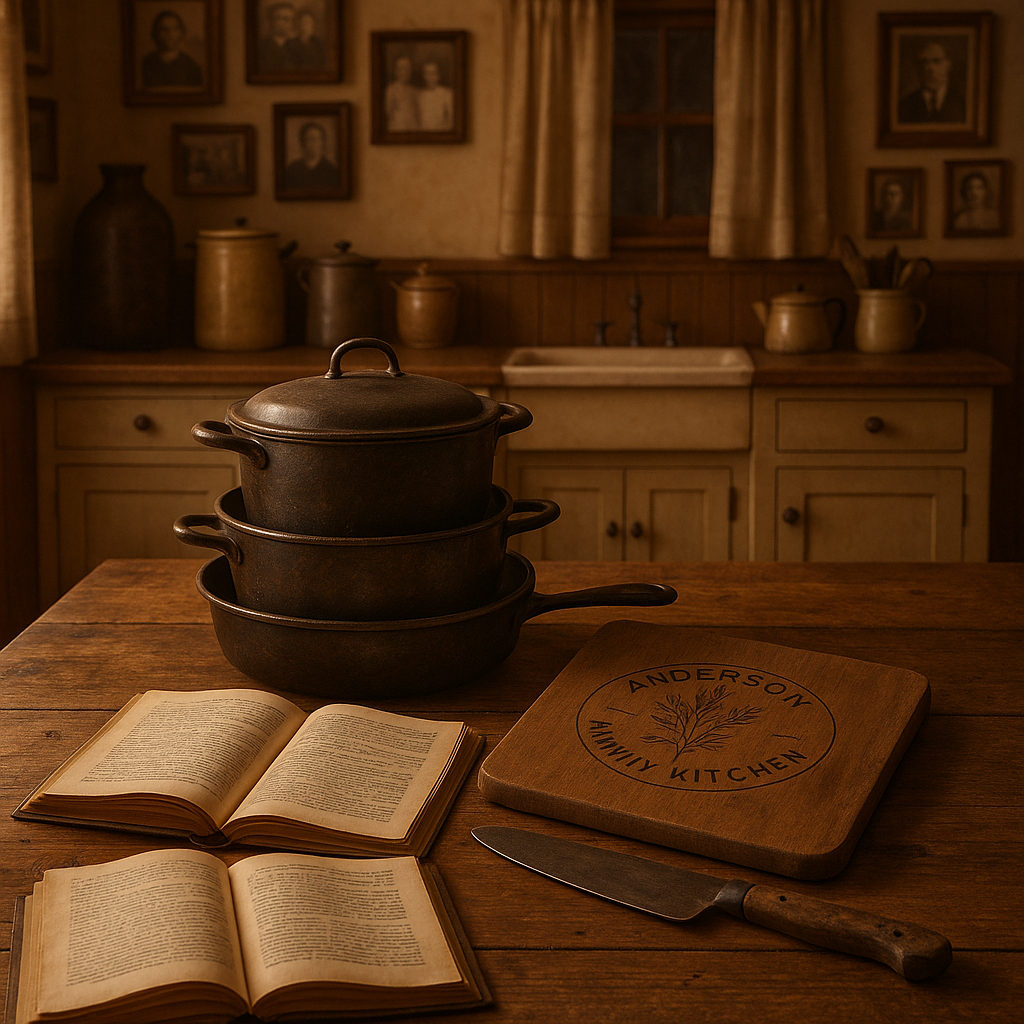
Their description emphasizes their commitment to craftsmanship and explains how customer feedback has shaped product evolution over decades—building trust through heritage and responsiveness.
Brand Q&A
This interactive module addresses common customer questions while controlling the narrative around your brand. Effective Q&As:
- Anticipate common customer concerns
- Address sustainability, sourcing, or quality questions
- Share founder perspectives or company philosophy
Example: A premium pet food brand uses their Q&A to address ingredients sourcing, manufacturing standards, and nutritional philosophy. Questions like “How do you select your ingredients?” and “What makes your formulation different?” allow them to highlight their veterinary partnerships and quality control processes—building confidence in a category where trust is paramount.
Amazon Brand Story best practices and common mistakes
The most effective Amazon Brand Stories share several key characteristics that drive engagement and conversion. Understanding these patterns—and the pitfalls to avoid—can significantly impact your results.
What top performers do right
- Strategic module selection: Successful brands don’t automatically use all available modules. They select only those that serve their narrative purposes, avoiding redundancy or overwhelming the customer.
- Visual consistency: High-performing content maintains cohesive visual identity across Brand Story, A+ Content, and product imagery—creating a seamless experience that reinforces recognition.
- Complementary content strategy: Rather than repeating information between Brand Story and A+ Content, they ensure each serves distinct purposes—brand narrative above, product details below.
- Emotion-driven storytelling: The most compelling Brand Stories tap into customer values and aspirations, not just product features, creating memorable connections.
- Data-informed decisions: Leading brands analyze which products benefit most from cross-promotion and regularly update their showcased ASINs based on performance.
Amazon’s Seller Forum discussions reveal that brands experiencing the greatest impact typically refresh their Brand Story content seasonally or when introducing significant new products—keeping it current while maintaining core narrative consistency.
Common pitfalls to avoid
Even established companies sometimes make these preventable mistakes:
- Visual overload: Cramming too many images, excessive text, or busy backgrounds creates visual chaos rather than clarity.
- Policy violations: Including prohibited content like time-limited promotions, excessive product claims, or references to customer reviews can lead to rejection.
- Duplicate messaging: Repeating identical information across Brand Story and A+ Content wastes valuable space and customer attention.
- Generic narratives: Vague claims like “highest quality” or “best customer service” without substantiation fail to differentiate your brand.
- Poor image quality: Low-resolution photos or amateur graphics immediately undermine brand credibility.
- Missing mobile optimization: Failing to consider how content displays on mobile devices, where most Amazon browsing occurs.
According to Amazon’s content guidelines, “Content should be factual and accurately represent the product.” This extends to brand claims as well—exaggerations or unsubstantiated assertions not only risk rejection but can damage customer trust.
Measuring success: impact of Brand Stories on conversion and customer loyalty
Implementing a Brand Story is just the beginning—understanding its impact requires thoughtful analysis across multiple metrics. While Amazon doesn’t provide direct engagement statistics for Brand Story specifically, several indicators can help assess performance:
Key performance indicators
- Conversion rate changes: Compare your conversion metrics before and after implementing or updating your Brand Story, controlling for other variables when possible.
- Average order value: An effective Brand Story often increases confidence, potentially leading to higher average purchases.
- Related product purchases: Track whether customers are buying products showcased in your ASIN module at higher rates.
- Brand Store traffic: Monitor increases in Brand Store visits originating from product detail pages.
- Return rate: Improved product understanding through effective storytelling may reduce returns due to misaligned expectations.
Optimization strategies
To continuously improve Brand Story performance:
- A/B testing: Create variations for different product lines or categories to determine which narrative elements resonate most.
- Customer feedback integration: Analyze product reviews and questions to identify areas where your Brand Story could better address concerns or highlight underappreciated benefits.
- Competitive analysis: Regularly review how market leaders in your category are evolving their Brand Stories to identify emerging trends.
- Seasonal refreshes: Update showcase products and imagery to align with buying patterns throughout the year.
Long-term impact extends beyond immediate sales metrics. A compelling Brand Story contributes to customer retention, word-of-mouth recommendations, and off-Amazon brand recognition—creating cumulative value that grows over time.
Amazon’s Brand Analytics (available to registered brands) provides additional insights into search and purchasing patterns that can inform your content strategy. By analyzing which terms drive discovery and how competitors are positioning themselves, you can refine your Brand Story to address evolving customer priorities.
Conclusion
Amazon Brand Story represents a significant opportunity to differentiate your products in an increasingly crowded marketplace. By thoughtfully communicating your company’s values, origin, and unique approach, you create an emotional connection with shoppers that extends beyond price and features.
The most successful Brand Stories aren’t just beautiful—they’re strategic. They address customer concerns, highlight meaningful differentiators, and create consistent experiences across the shopping journey. Whether you’re a new brand establishing your identity or a legacy company adapting to e-commerce, this premium content space deserves careful attention.
The examples and best practices outlined demonstrate that effective Brand Stories aren’t about grand claims or marketing hype—they’re about authentic communication that builds trust through transparency, quality, and connection. In the digital marketplace where shoppers can’t physically interact with products before purchase, these elements become increasingly critical to conversion success.
As Amazon continues evolving its platform capabilities, brands that master the art of storytelling will enjoy a significant competitive advantage. By implementing the strategies discussed and regularly measuring their impact, you can transform this content feature from a static display into a dynamic conversion tool that builds lasting brand equity.
Frequently asked questions
What is an Amazon Brand Story and where does it appear?
The Amazon Brand Story is a visual, narrative-driven module that appears above A+ Content on a product detail page, helping brands connect with customers by sharing their origin, values, and products.
Who can use the Brand Story feature on Amazon?
Only brands enrolled in Amazon Brand Registry have access to the Brand Story module via A+ Content Manager.
Are Brand Story modules indexed for SEO on Amazon?
Content added in Brand Story modules is not indexed for Amazon’s search algorithm, but a compelling story can increase on-page engagement and sales.
Can I link multiple products in my Brand Story?
Yes, with the ASIN & Store Showcase module, you can link up to four ASINs, and up to six via comparison charts in the main A+ Content.
Should my Brand Story be the same across all ASINs or customized?
You can use a consistent Brand Story for all products or create tailored versions for specific categories or products, depending on your brand strategy and resources.